Workshops in France Scholarship Program

We offer a scholarship opportunity to an artist who is actively pursuing future art goals: this full scholarship will be awarded to one of our exclusive workshops or retreats. Although it is not exclusively designed for a younger recipient, we are interested in inspiring the next generation of artists…
Meet Vanessa Rothe—Founder of Americans in Paris

You may have already heard of our upcoming event called Americans in Paris Paint Provence, which will take place in September 27-October 6, 2020. This once-in-a-lifetime workshop is a co-presented by Americans in Paris and Workshops in France, and will feature instruction by 5 of today’s contemporary masters. Americans in Paris is the brainchild of Vanessa Rothe, renowned fine artist, curator, author and designer, headquartered in the famed art center of Laguna Beach, California. We recently sat down with Vanessa to learn more about this amazing program, how it came about and what it means. WIF: What was the inspiration for your creation of the Americans in Paris art project? Americans in Paris started out with the initial idea to inspire some of the American artists of today to travel to Paris where so many great artists had gained inspiration through the ages, to collect exciting new ideas for their works of art. Following in the footsteps of the great American painters before them, such as Sargent, Whistler, and Cassat, a group of American realist and impressionist artists would travel to Paris, the City of Light, architecture, and fine art and draw inspiration from all that the city offered. There they would copy in museums, study the masters, absorb the culture, share ideas and inspiration and paint together with the goal of reaching the next level of mastery in their work. WIF: How does a project like this tie in with the purposes of you and other artists? The main purpose is to create new exciting works with important and interesting subjects. Many great artists can paint, but a project such as the Americans in Paris inspires us with exquisite subjects. We learn from European masters not only for technique, but for subjects as well, and seeing European scenes and architecture Subject matter is a big part of sales and identity to an artist. Being French and having lived surrounded by these ideas, France is a big part of my works and my identity as an artist. It’s who I am, so it’s what I paint. My whole life. I always have ideas to paint, and they sell well since my subjects are as interesting, or as beautiful or as easy to look at as they are pleasing. Painting European scenes and selling them in California has made me stand out among other landscape painters here over the last 20 years. Americans in Paris allows me to share what I do and my recipe for success with friends to help them, and also to help raise the quality of art in America in general. These are top painters and they are benefit from this inspiration. For other artists, I’m trying to introduce them to more European subjects which are considered foreign and different and exciting. For collectors, the allure of the “ foreign” is always interesting, be it clothing, art, or food. WIF: Talk about your original Paris retreat, the Paris Seminar. In order to raise funds for the original retreat, I curated an exhibition at the Salmagundi Club in New York in 2016 for 12 select American realist and impressionist artists. Many works were sold and we were able to plan for the journey. The first trip to Paris was actually created as a workshop week in May of 2017 that I organized to give the artists valuable relative information about art history, as well as the humanities and group figure composition. The 12 American artists painted in Paris and the Grande Chaumiere atelier for one week together, and filled their sketchbooks and minds with new ideas, some inspired by the past. The group had lively evening discussions based on specific topics, just like creative groups of the past such as the Impressionists and Hemingway and Fitzgerald’s writing groups did in the Paris bistros and bars years before. Image Courtesy of Павел Котов. WIF: What do you feel attendees took away from that retreat? Tons of new ideas, subjects, and influences from one another. They all told me it was a game changer, and they were infused with new life and ideas! WIF: Why did you join forces with Julie Snyder for the upcoming Americans in Paris/Workshops in France joint retreat? I honestly needed hep with the organizational aspect—it’s too much for one person and Americans in Paris had grown with success. I decided then, that I wanted help from a workshop, and I felt that Julie was more than capable of helping make this joint venture great. It was the perfect choice. I’ve always admired and had been watching Julie’s workshops for years. I also knew her personally from our plein air conference, and we always got along. We’re like-minded artists and lovers of France, and I’m very excited that we are joining forces. WIF: This exclusive workshop-retreat is for both artists and collectors. What do you feel attendees will achieve? I feel they will walk away with the same inspirations as those on our 2017 retreat—infused with ideas and subjects. And with these 5 teachers, they will also learn to improve their technique. In addition to all that, they get to totally enjoy France. They can focus on their art and their inspirations, without the worry of where to eat and where to stay. We all can focus on our creating! It’s a huge win for us all. We are making art history. As writers and artists of the past grouped together to share ideas and common threads, we are weaving our ideas together and creating new art. I’m very honored to help the artists of today evolve new ideas, to inspire them in a way with what comes natural to me with my French history, to share the knowledge I have of art history, and to share the beauty of Provence. Learn more about Americans in Paris Paint Provence and sign up here. Casey Childs: Youthful Decadence.
Anne Wickham Smith Aids Women in Guatemala

Anne Wickham Smith recently transformed the purpose for creating artwork, using the sale of her paintings to raise substantial funds to help the women of a Guatemalan village, Xela. In 2004, she took some oil painting lessons and was hooked, going on to study with the some of the best oil painters in the country…
What to Bring on Plein Air Trip. Besides Your Painting Supplies.

As far as actual painting supplies go, there are many lists of what to take when plein air painting. Just Google them. Over the past 10 years of delivering plein air workshops and after 1000s of paintings outdoors, we have discovered there are other things that can save the day which might not be obvious and are not on everyone’s list. In addition to painting gear, what else qualifies as handy, timesaving and essential to your painting enjoyment? Some may consider these superfluous, especially if weight and distance are real factors—but bear in mind we do bring our guests as close as possible to painting locations to avoid such burdens. Some of our recommendations are: 1. Multi-tool Very handy when you cannot unscrew that lid off a tube of paint. Or you wish you had a pair of scissors. Or your French easel’s wing nuts need an extra torque. 2. Spring Clips Clip canvas to a board, provide extra security for your umbrella, or clamp on a holder to support the handle of your solvent wash tank. 3. Collapsible Cups This is for, um, drinking. Just watch what you drink when you paint (just sayin’). If your paint is water-based, such an item is an obvious space saver to hold water. 4. Water Okay, this is probably on every list—as it should be every time you go and paint anywhere. Dehydration can completely ruin your efforts. We do provide bottles of water for guests in our workshops, but just to be ecological we encourage them to refill bottles from the tap. The water at the various chateaux is fine (you can even find the same water bottled, labeled and sold in the village). 5. Bear Spray Yep, you read that right. The contributor of this tip says “I always carry it if I’m painting alone (I’ve had a few creepy incidents and feel safer with it). I’d recommend it for anyone painting alone, especially in a remote location. Sometimes we can get so immersed in our work that we aren’t alert to potential dangers. It’s similar to pepper spray but not designed to debilitate bears, so it’s not as strong as pepper spray. It is designed to deter and stop a charging bear.” 6. Your Smartphone Maybe this is a redundant point—do we ever go anywhere without it? But nowadays it’s become the go-to tool. Its camera is the most ubiquitous tool—you can take reference photos, convert them to black and white to see the values in the scene. iPhones have a compass, so you can track the movement of the sun and decide where to set up in relation to this important piece of information. You can set a timer, tell the time, text a friend, send for back-up, play music, make or dictate notes. Geo-tag your photos so in the future you can return to that exact same spot. 7. Baby Wipes Baby wipes are great to have on you for so many reasons. Spills, drips and splashes – wipes to the rescue. Let’s face it, art is messy. But we have also used baby wipes to clean brushes, they clean them so much better than paper towels. Once you try them, you will probably never go back to paper towels. 8. Bug Spray If you’re me, you cannot leave without it. I am irresistible to mosquitoes and the like. If you stand next to me, you’ll probably not need any, as the mosquitoes will be seeking me. I spray my exposed limbs, my shoes and my hat. I often use natural repellents that are heavy on citronella. It has a strong smell—sorry, but it works. 9. Nitrile Disposable Gloves Even if you don’t wear gloves to paint, these are great to have anyway. If you have to tackle anything you’d rather not handle because it’s dirty, use the gloves. Emptying garbage, pumping gas, cleaning you palette, wiping down your equipment is always easier if you don’t get your hands dirty. And they take up next to no room. 10. Carabiner A carabiner can serve to suspend a solvent wash tank. It can be used to suspend a weight to hold your easel steady in the wind—just fill your backpack or your garbage bag with a few rocks and hang it from the center of your easel. Then, after you’re done you can use it to clip your solvent tank or trash bag to the outside of your backpack. Region Specific You may need to bring very specific supplies depending on where you paint. For example, in certain zones you may need to worry about snakes. If you’re painting in Northwest Europe, you have to think about rain gear. If you are very far north you may need additives to prevent your paint from freezing. Good luck and happy painting! Thanks so much to Jane Hunt, Celeste De Coudres and Fallon Peper for their input. Blogger: Julie Snyder Julie Snyder is a professional artist and also the programs director of Workshops In France. A native of Scotland, she is a seasoned traveler who splits her time between California and France. You can learn more about her role with Workshops in France here.
Can You Hear Me Now? Staying in Touch.

You are coming to France, Italy or anywhere in Europe for a one-of-a-kind art retreat, and will be immersed in the color, sight, sensation and utter creation of the experience. You don’t want it marred by aggravation when you can’t easily reach friends and loved ones back home…
Tech, Art and a Starry Night.

Think, marvelous. Think, spectacular. Think, cool. Very Cool. There is nothing to prepare you for what you encounter at Les Baux.
You step from bright, hot sunshine into the dark, refreshing, cavernous realm of a fantastic world. Impossible to accurately describe…
Instagram for Artists
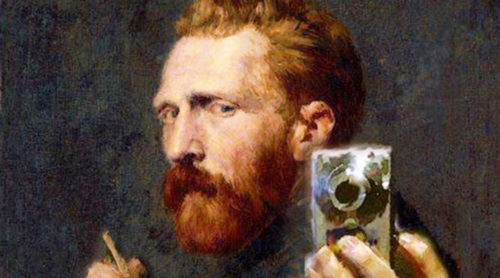
Why on Earth Should Artists be on Instagram? You are? Good for you! No? You may have your reasons.
Whatever the situation, you should understand why the platform is really a gift for artists. And it’s easily the best use of time and energy on social media.
Indian Yellow: The Ethics of Color
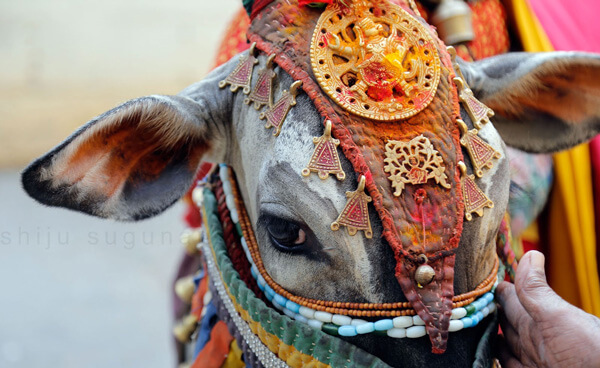
Indian yellow is a strong transparent pigment favored by many artists for its tinting properties. This yellow-orange color’s most alluring characteristic is that it can be used to warm up a color. Added to pink it makes that color turn red. Added to Cerulean Blue it makes a vibrant green.
Experience more – extend your stay

Come to Paint, Stay to Explore. Your time with us will be full of wonderful painting spots, breathtaking views and charming villages. But why not take in more? Shouldn’t you extend your stay? Guests ask us “Where should visit?” before or after their workshop or art retreat. You have invested in an overseas trip and seeing more of what France and Europe have to offer just makes sense. It’s not hard to fall in love with France and here’s our advice on where to go. Avignon, Aix-en-Provence and Paris Most of our guests prefer to stay in the South of France or to venture up to Paris, so that’s what we’ll focus on here. We use two principal locations for our workshops and retreats, a château near Avignon and another near Aix-en-Provence. It’s a no-brainer that if you come to one chateau and want to stay longer in Provence, you could simply opt to explore the area around the other. One château is about 30 minutes from Avignon and while there you can expect to visit some of the area’s most paintable places. However, there are other fabulous villages where we can’t paint due to the crowds or lack of facilities – in other words, they are not suitable for setting up painting gear. Since these locations are still a must-see, we usually squeeze in a drive-by and quick stop-off to shoot pictures on our Photo Safari, and they are well worth a return visit! This part of Provence is famous for its “perched” villages – villages built upon rocky hills, that leave the good arable land below open to farming grapes, olives, fruit and lavender in abundance. They vie for the Most Beautiful Villages in France designation. These locations are full of character with winding streets and jaw-dropping charm. Take loads of pictures to fuel inspiration for months, if not years. Turning back time Some of the villages perchés include Gordes, Bonnieux, Les Baux and Roussillon, each with its own character and flavor. A favorite is Lacoste, a hillside village that connects you to the past. Imagine it – a hilltop château overlooking the Luberon valley, with winding, stepped, cobbled streets that allow pedestrians to meander through the village below. There is a sense of both timelessness and anachronism in Lacoste. Made infamous by the Marquis de Sade who occupied the château in the mid-1700s, the village is now home to (SCAD) the Savannah College of Art and Design’s Study Abroad Program. You’ll often see art students in the village practicing contemporary art in the traditional surroundings of a medieval fortress village. The city of Avignon is one of the gems of Provence. It has a rich history and still boasts its walled, medieval center with the Palais de Papes (the Palace of the Popes) at its heart. The old city has great cafés and restaurants, charming shops and plenty to see. We don’t paint here as parking is a veritable nightmare due to the construction of a tram system around the walled city’s perimeter. But, for intrepid guests, it is virgin territory. Our other Chateau is outside of Aix-en-Provence, the home of Cézanne. Although we will be spending time in Aix, it is well worth another visit as there is so much to see and do in the ancient Roman Capital of Provence! It has some of the most impressive 17th-century architecture outside of Paris, with broad tree-lined streets, fountains galore (they say there are a thousand) and a thriving café scene. Oh, and Art Museums! The villages of Lourmarin and Cucuron are both visit-worthy, as are any of the other little villages tucked away in the nearby Luberon hills. Does a swim in the Mediterranean sound divine? Keep in mind that this is the South of France – so spending time by the Mediterranean Sea is a must! Our favorites fishing villages are Cassis and La Ciotat, and there are plenty more to explore. You can travel the coast all the way to the Italian border stopping to delight in Antibes, Cannes, Nice, Villefranche-Sur-Mer or Eze. Nothing compares to having lunch at one of these spots, watching the fishing boats unload their catches and of course, the seafood is as fresh as can be! Well, perhaps returning to a seaside bar for an evening glass of Rosé as the sun sets would be just as fine. From either Avignon or Aix-en-Provence, Paris is only 3 or 4 hours away by high-speed rail. Many guests love to explore the city of lights and love, France’s romantic capital. The museums in Paris are among the top rated in the world. Monet’s garden at Giverny can be reached easily from Paris. So different from the South, Paris can add another whole level of experience to your trip. As you can probably tell, we fell in love with France and could go on with more suggestions but part of the joy of this region is discovering it for yourself! Taking a diversion from your planned trip can often lead to you stumbling upon your own hidden treasure. Happy hunting! W.I.F. Blogger: Shirley Hambrick Shirley Hambrick is an award-winning stained-glass artist and painter. She has lived in Scotland, Spain and the USA. Shirley has been part of the Workshops in France team over the last few years and attended over 10 of these trips. Being Scottish, she was trained at Edinburgh College of Art and Design. Shirley teaches in the West Virginia area and you can some of her beautiful work here.
Ultramarine Blue and its Adoring Artists
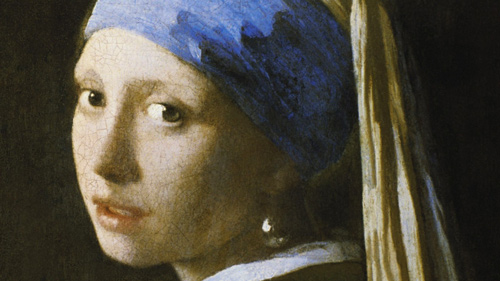
Look in your paint box and you’ll no doubt find Ultramarine Blue, the most widely sold color after white. Artists have adored this blue pigment for millennia. We forget sometimes that paint is simply ground up minerals mixed with a binder. In the case of Ultramarine, this rich pigment has a wonderful history.